
Overview Summary
The types of dosa list includes traditional regional varieties as well as popular restaurant-style preparations. Although many dosas share a basic fermented batter, their ingredients, thickness, fillings, toppings and cooking methods can make them taste completely different.
Some dosas are crisp and paper-thin, while others are soft and fluffy. Some are filled with spiced potatoes, while others incorporate vegetables, cheese, spices or different grains.
The 20 varieties covered here include classic favourites such as masala dosa and paper dosa alongside regional preparations such as neer dosa, set dosa and pesarattu.
Key Takeaways
- There are numerous types of dosa, and no fixed number applies across India.
- Traditional dosa is generally prepared using fermented rice and lentil batter.
- Masala dosa is recognised for its spiced potato filling.
- Paper dosa is particularly thin and crisp.
- Set dosa is thicker, softer and usually served in a small stack.
- Neer dosa is thin and delicate and is associated with Karnataka.
- Pesarattu is made primarily from green gram rather than the traditional rice-and-urad-dal combination.
- Different dosa varieties can feature vegetables, spices, cheese and other ingredients.
- Regional dosa recipes demonstrate India’s diverse culinary traditions.
- Restaurants such as Amma’s Rasoi at Boomerung Complex, Noida, can provide opportunities to explore South Indian-inspired dishes.
Introduction
Dosa is one of India’s most recognisable South Indian dishes, loved for its crisp texture, savoury flavour and remarkable versatility. It has travelled far beyond its South Indian origins and become a favourite across India and internationally. Its appeal comes partly from its adaptability. The same basic concept can be transformed through changes in batter, filling, thickness and toppings.
While the classic dosa is made from a fermented rice-and-lentil batter, regional traditions and modern culinary creativity have resulted in numerous variations. From thin and crispy paper dosa to soft set dosa, spicy masala dosa and ingredient-rich varieties, exploring the types of dosa can be an exciting way to discover different flavours and cooking styles.
If you have ever wondered how many types of dosa there are, there is no single official number. Different regions, restaurants and home cooks have developed their own versions, meaning the list can continue to grow.
Let’s explore 20 well-known varieties and discover what makes each one unique.
20 Types of Dosa You Should Know
1. Plain Dosa
Plain dosa is one of the most familiar varieties. It is generally prepared using fermented rice and urad dal batter and cooked on a hot griddle until golden and crisp.
Its simple flavour makes it versatile and allows accompaniments such as sambar, coconut chutney and tomato chutney to stand out.
2.Masala Dosa
Masala dosa is arguably one of the most famous types of dosa.
The dosa is cooked until crisp and filled with a spiced potato mixture. The filling may contain potatoes, onions, mustard seeds, curry leaves, turmeric and other spices.
The contrast between the crisp dosa and soft, savoury filling makes it particularly popular.
3. Paper Dosa
Paper dosa gets its name from its extremely thin appearance.
The batter is spread into a large, thin circle and cooked until crisp. It can become significantly larger than a regular dosa and is often folded or rolled before serving.
Its delicate crispness is what distinguishes it from thicker varieties.
4. Set Dosa
Set dosa is quite different from paper dosa. It is thicker, softer and spongier, and is traditionally served as a small stack.
The texture makes it particularly suitable for soaking up chutneys and vegetable-based accompaniments.
Unlike very crisp dosas, set dosa offers a soft and fluffy eating experience.
5. Rava Dosa
Rava dosa is made using semolina, commonly called rava, along with other ingredients such as rice flour.
The batter is generally more fluid than conventional dosa batter and is poured in a way that creates a lacy, hole-filled texture.
It is usually served crisp and can be prepared with onions, herbs and spices.
6. Onion Dosa
Onion dosa incorporates finely chopped onions into the preparation.
The onions can become slightly caramelised as the dosa cooks, adding sweetness and texture to the crisp surface.
Spices, green chillies and coriander may also be added for additional flavour.
7. Podi Dosa
Podi dosa is typically topped with a spicy South Indian lentil-and-spice powder known as podi.
The podi adds heat, nuttiness and complexity to the dosa. Some preparations combine podi with ghee or oil to create a richer topping.
It is a good option for people who enjoy bold flavours.
8. Ghee Roast Dosa
Ghee roast dosa is prepared using ghee while cooking, giving the dosa a rich aroma and crisp texture.
It is often spread thinly across the griddle and cooked until deeply golden.
The addition of ghee gives this variety a richer character than a standard plain dosa.
9. Mysore Masala Dosa
Mysore masala dosa is known for its spicy chutney or paste spread inside the dosa before the potato filling is added.
The combination of crisp dosa, spicy spread and potato masala produces a flavour profile that is more intense than a standard masala dosa.
It is particularly popular among diners who enjoy spicy food.
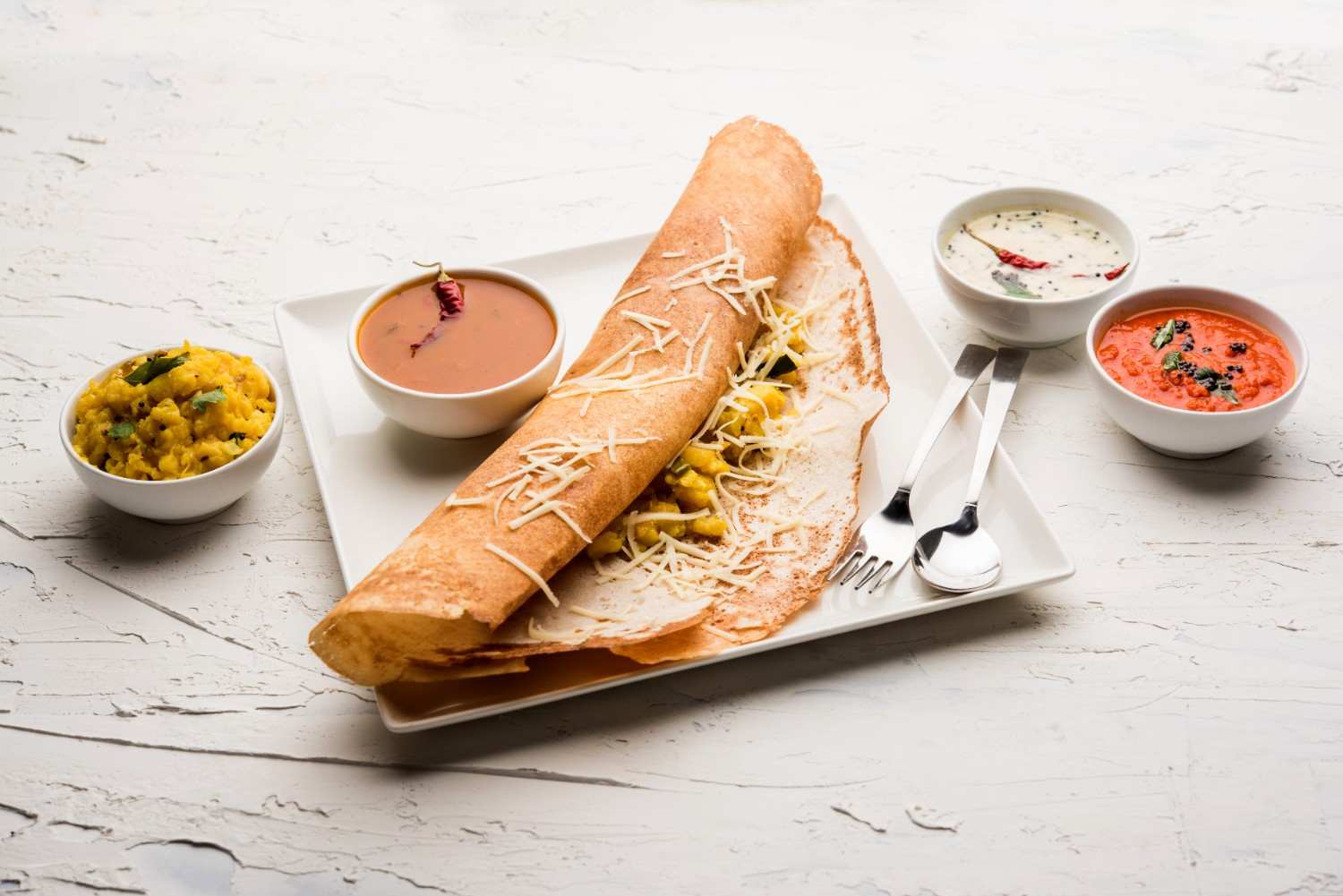
10. Cheese Dosa
Cheese dosa is a more contemporary variation.
Grated cheese is added while the dosa cooks, allowing it to melt across the crisp surface. Additional vegetables, onions, chilli or spices may be included.
It combines the familiar texture of dosa with the creamy richness of melted cheese.
11. Paneer Dosa
Paneer dosa incorporates Indian cottage cheese into the filling.
The paneer may be combined with onions, capsicum, spices and other vegetables before being placed inside the dosa.
It provides a protein-rich filling with a softer and more substantial texture.
12. Spring Dosa
Spring dosa is inspired by the flavours and ingredients associated with Indo-Chinese cuisine.
The filling may contain stir-fried vegetables, cabbage, carrots, capsicum and sauces.
The crisp dosa serves as a wrapper for the savoury vegetable mixture, creating a fusion-style preparation.
13. Neer Dosa
Neer dosa is a delicate variety associated particularly with Karnataka.
Unlike conventional fermented dosa batter, neer dosa is generally made using a thin rice batter and does not require the same fermentation process.
The resulting dosa is thin, soft and slightly translucent rather than crisp.
14. Pesarattu
Pesarattu is a traditional Andhra Pradesh and Telangana preparation made primarily from green gram, also known as moong dal.
Unlike conventional dosa, it does not rely primarily on fermented rice-and-urad-dal batter.
It has a distinct greenish appearance and earthy flavour and is often served with chutney or a suitable accompaniment.
15. Adai
Adai is a thicker South Indian savoury pancake made using a combination of lentils and rice.
It can contain ingredients such as:
- Chana dal
- Toor dal
- Urad dal
- Rice
- Dried red chillies
- Curry leaves
Because of its multi-lentil batter, adai has a hearty texture and pronounced savoury flavour.
16. Millet Dosa
Millet dosa replaces some or all of the traditional grains with millet.
Different varieties of millet can be used depending on the recipe. Millet dosa has become increasingly popular among people looking to explore alternative grains.
The exact texture and flavour depend on the millet and preparation method.
17. Oats Dosa
Oats dosa is a modern variation that incorporates oats into the batter.
It is often prepared using ground oats combined with ingredients such as rice flour, spices and vegetables.
Because it can be prepared without lengthy traditional fermentation, it is convenient for home cooks seeking a quick dosa-style meal.
18. Pesarattu Upma Dosa
Pesarattu can also be served with a filling of upma, creating the popular pesarattu-upma combination.
The green gram-based dosa provides an earthy, savoury exterior, while soft upma adds a contrasting texture.
This combination showcases how dosa can become a more substantial meal through creative fillings.
19. Chocolate Dosa
Chocolate dosa is a sweet, contemporary interpretation of the traditional dish.
Instead of savoury fillings, chocolate spread, chocolate sauce, fruits or nuts may be used.
It is particularly popular as a dessert-style preparation and demonstrates how versatile the dosa format can be.
20. Sweet Dosa
Sweet dosa refers to preparations where the batter or filling is adapted to create a dessert or sweet snack.
Depending on the recipe, ingredients such as jaggery, coconut, banana, cardamom or sugar may be included.
Sweet dosa varieties demonstrate that dosa does not have to be limited to savoury meals.
Enjoy South Indian Flavours at Amma’s Rasoi, Boomerung Complex, Noida
For those interested in exploring Indian flavours, Amma’s Rasoi at Boomerung Complex, Noida offers a setting to enjoy familiar Indian culinary favourites in a comfortable dining environment.
Located at Boomerung Complex in Jaypee Greens Wish Town, Sector 128, Noida, Amma’s Rasoi is among the prominent dining options available at the complex. For diners interested in South Indian-inspired flavours, a restaurant setting can provide an opportunity to experience dishes such as dosa as part of a broader meal.
Whether you prefer the crisp texture of a masala dosa, the simplicity of a plain dosa or enjoy experimenting with different variations, exploring dosa at a restaurant can also help you appreciate the diversity of preparation styles associated with this popular dish.
Also Read: How to Make Authentic Masala Dosa at Home: Amma’s Rasoi Recipe
Conclusion
Exploring the different types of dosa reveals just how versatile this South Indian favourite can be. From crisp paper dosa and ghee roast to soft set dosa, earthy pesarattu and delicate neer dosa, each variety offers a distinctive combination of ingredients, texture and flavour.
Traditional regional recipes continue to coexist with modern interpretations, allowing chefs and home cooks to create new combinations. The types of dosa discussed in this guide provide a starting point for discovering this diverse culinary category. Whether you prefer a classic masala dosa, a spicy podi version, a hearty paneer filling or a sweet contemporary variation, there is a dosa to suit almost every palate.
For food lovers in Noida, exploring options at destinations such as Amma’s Rasoi at Boomerung Complex can be another way to enjoy Indian cuisine and discover familiar dishes in a dining-out setting. Ultimately, the best way to understand dosa is to taste different varieties and discover which combination of crispness, softness, spice and filling you enjoy most.